Inter-Services Public Relations (ISPR) Director General Lt Gen Ahmed Sharif Chaudhry said on Thursday that Pakistan had the right to self-defence and “everything that is necessary will be done” in response to terrorism emanating from Afghanistan . Pakistan has seen a surge in terrorism since the banned Tehreek-i-Taliban Pakistan (TTP) ended its ceasefire deal with the government in November 2022, vowing to increase attacks. In response, the government labelled the group as Fitna-al-Khawarij and directed use of the term khariji for attackers. The military spokesperson’s assertion came during a press briefing that was mainly focused on rebutting Indian media reports that an individual wanted in connection with the April 22 Pahalgam terrorist attack last year had been killed during an “encounter” in occupied Kashmir. When asked about terrorism and attacks from Afghanistan, he said: “Our policy is very clear that there is no compromise on the territorial integrity, sovereignty, and any threat to the security and stability of Pakistan. “Pakistan has a right to self-defence, and come what may, everything that is necessary will be done. I hope that gives you an idea as far as the perspective of the armed forces is concerned.” “What we will do and when we will do (it) with the Afghan Taliban regime is up to us to decide,” the DG ISPR said in response to a question regarding the recent increase in strikes on Afghanistan. “They have made their choice of abetting and sponsoring terrorism.” He added that the question that should be asked by the international media was where Bashir Zeb — “an international terrorist of an internationally recognised terrorist organisation” — and Noor Wali, “the khariji” , were. “Why are there Afghans who are part of the formations coming and exploding here? What is Afghanistan doing about it? That is the relevant question,” he said. The spokesperson added that to safeguard Pakistan’s citizens, particularly in Khyber Pakhtunkhwa and Balochistan, “whatever needs to be done, we will do it, at the time and place and (via) the method that we think is most feasible”. He stressed, however, that “Pakistan has got nothing against the Afghan people, absolutely nothing … The problem is with this Afghan Taliban regime.” He termed the Afghan Taliban regime “non-inclusive”, “non-representative” and “non-elected”, adding that as a “forced” regime, it required a status of insecurity and oppression in which such regimes thrived. “So for that, they have gathered all the terrorist organisations of the world, the whole alphabet — the whole soup is there, from AQIS, to ISKP, to ETIM, to IMU, FAK, FAH; God knows what,” he quipped. He also raised the question of an Aug 26 meeting headed by the governor of Kandahar, Mullah Shirin, and involving Al-Qaeda, Bashir Zeb, Gul Bahadur and the Afghan Taliban, in which, Chaudhry said, they coordinated how to combine their forces as they were being “beaten out of hell” individually. In this meeting, he added, the Afghan Taliban agreed to coordinate, and the Balochistan Liberation Army (BLA) also requested Gul Bahadur for manpower. “What is common between BLA and Fitna-al-Khawarij ? Nothing,” Chaudhry said, adding that the Baloch were egalitarian and gender equal, especially in the south. By contrast, he said, the kharijis treated women “as fodder, as cattle”. “What is common amongst them? Money. The Afghan Taliban, who is sheltering them,” he stated, adding, “Any country will do everything to safeguard its citizens.” Islamabad has repeatedly urged the Taliban administration in Kabul to dismantle terrorist sanctuaries on Afghan soil, particularly those linked to the banned TTP, that are used for attacks in Pakistan. Officials say those appeals have gone unheeded. According to a UN Security Council-mandated monitoring report — covering the period from Dec 16, 2025 to June 9, 2026 — Afghan Taliban’s continued support for TTP has contributed to a rise in the frequency and lethality of terrorist attacks in Pakistan, even as Kabul has taken some initial steps to rein in the group. The report also pointed to growing operational and facilitation linkages among the TTP, Al Qaeda, Islamic State-Khorasan (ISIL-K) and the Baloch Liberation Army (BLA). On the night of February 26, following unprovoked firing by the Afghan Taliban from across the border, Pakistan launched Operation Ghazab lil Haq against terrorist hideouts. More to follow
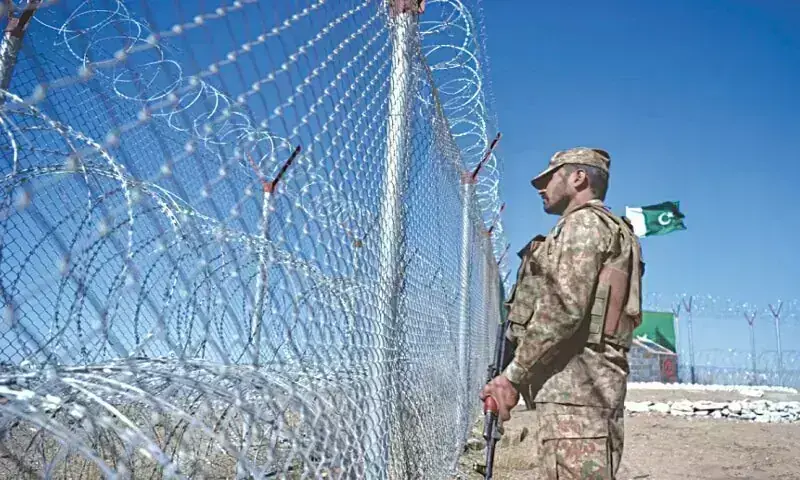
'Everything necessary will be done': Military spokesman reaffirms Pakistan's right to self-defence against Afghanistan-based terrorism
Inter-Services Public Relations (ISPR) Director General Lt Gen Ahmed Sharif Chaudhry said on Thursday that Pakistan had the right to self-defence and “everything that is necessary will be done” in response to terrorism emanating from Afghanistan . Pakistan has seen a surge in terrorism since the banned Tehreek-i-Taliban Pakistan (TTP) ended its ceasefire deal with the government in November 2022, vowing to increase attacks. In response, the government labelled the group as Fitna-al-Khawarij and directed use of the term khariji for attackers. The military spokesperson’s assertion came during a press briefing that was mainly focused on rebutting Indian media reports that an individual wanted in connection with the April 22 Pahalgam terrorist attack last year had been killed during an “encounter” in occupied Kashmir. When asked about terrorism and attacks from Afghanistan, he said: “Our policy is very clear that there is no compromise on the territorial integrity, sovereignty, and any threat to the security and stability of Pakistan. “Pakistan has a right to self-defence, and come what may, everything that is necessary will be done. I hope that gives you an idea as far as the perspective of the armed forces is concerned.” “What we will do and when we will do (it) with the Afghan Taliban regime is up to us to decide,” the DG ISPR said in response to a question regarding the recent increase in strikes on Afghanistan. “They have made their choice of abetting and sponsoring terrorism.” He added that the question that should be asked by the international media was where Bashir Zeb — “an international terrorist of an internationally recognised terrorist organisation” — and Noor Wali, “the khariji” , were. “Why are there Afghans who are part of the formations coming and exploding here? What is Afghanistan doing about it? That is the relevant question,” he said. The spokesperson added that to safeguard Pakistan’s citizens, particularly in Khyber Pakhtunkhwa and Balochistan, “whatever needs to be done, we will do it, at the time and place and (via) the method that we think is most feasible”. He stressed, however, that “Pakistan has got nothing against the Afghan people, absolutely nothing … The problem is with this Afghan Taliban regime.” He termed the Afghan Taliban regime “non-inclusive”, “non-representative” and “non-elected”, adding that as a “forced” regime, it required a status of insecurity and oppression in which such regimes thrived. “So for that, they have gathered all the terrorist organisations of the world, the whole alphabet — the whole soup is there, from AQIS, to ISKP, to ETIM, to IMU, FAK, FAH; God knows what,” he quipped. He also raised the question of an Aug 26 meeting headed by the governor of Kandahar, Mullah Shirin, and involving Al-Qaeda, Bashir Zeb, Gul Bahadur and the Afghan Taliban, in which, Chaudhry said, they coordinated how to combine their forces as they were being “beaten out of hell” individually. In this meeting, he added, the Afghan Taliban agreed to coordinate, and the Balochistan Liberation Army (BLA) also requested Gul Bahadur for manpower. “What is common between BLA and Fitna-al-Khawarij ? Nothing,” Chaudhry said, adding that the Baloch were egalitarian and gender equal, especially in the south. By contrast, he said, the kharijis treated women “as fodder, as cattle”. “What is common amongst them? Money. The Afghan Taliban, who is sheltering them,” he stated, adding, “Any country will do everything to safeguard its citizens.” Islamabad has repeatedly urged the Taliban administration in Kabul to dismantle terrorist sanctuaries on Afghan soil, particularly those linked to the banned TTP, that are used for attacks in Pakistan. Officials say those appeals have gone unheeded. According to a UN Security Council-mandated monitoring report — covering the period from Dec 16, 2025 to June 9, 2026 — Afghan Taliban’s continued support for TTP has contributed to a rise in the frequency and lethality of terrorist attacks in Pakistan, even as Kabul has taken some initial steps to rein in the group. The report also pointed to growing operational and facilitation linkages among the TTP, Al Qaeda, Islamic State-Khorasan (ISIL-K) and the Baloch Liberation Army (BLA). On the night of February 26, following unprovoked firing by the Afghan Taliban from across the border, Pakistan launched Operation Ghazab lil Haq against terrorist hideouts. More to follow