• Araghchi says Tehran can reply to proposal within days; Iranian atomic chief vows not to give up enrichment • Centcom terms Hormuz closure claims ‘false’ TEHRAN: Iran announced on Thursday that it was still reviewing Washington’s response to a proposal under which the Strait of Hormuz could reopen within seven days, as US President Donald Trump indicated that he will not attack Iran before November’s midterm elections amid ‘productive talks’. Iranian Foreign Minister Abbas Araghchi said Tehran could reply within days, according to the semi-official Tasnim news agency, emphasising that “the diplomatic process is still continuing”. Trump wrote on Truth Social that Washington will not strike Iran prior to the Nov 3 midterm elections, calling talks with Tehran “productive”. “I want to make it clear to everybody that, while Iran is in very bad condition … we will not be attacking Iran at any time prior to the midterm elections to be held in the United States on Nov 3,” Trump wrote. Meanwhile, Trump said that his special envoy Steve Witkoff is “doing very well” in negotiations with Iran, though he indicated that an agreement is not his preferred outcome, Anadolu reported. “He’s working on the Iran deal and doing very well. I think the deal isn’t really something that I want to do, but they’re willing to offer us anything to stop,” Trump told supporters at a campaign rally in San Antonio, Texas, adding that Tehran “will never have a nuclear weapon”. Trump described Witkoff as “a great negotiator” who has “done some phenomenal things”, citing the ceasefire deal in Gaza, and said he expects the war with Iran to end soon. “That war ends — it’s going to be very soon. It’s got to be very soon,” Trump said, describing Iran as “a failed nation”. He also reiterated his claim that Iran has been defeated “economically and militarily” and said the US naval blockade will remain in place, while claiming that oil is flowing through the Strait of Hormuz in “record numbers” with 22 million barrels passing through Wednesday night. Despite the ongoing talks, Iran will not abandon uranium enrichment or hand over its uranium, state media reported Thursday, citing Mohammad Eslami, the head of Iran’s Atomic Energy Organisation. Dismissing renewed US threats against Iran’s nuclear facilities as “nothing new”, he said enrichment was “an inseparable part” of the nuclear process. On the aviation front, the first commercial flight operated by a foreign airline to fly into Iran since the outbreak of the Middle East war landed on Thursday, state media reported, after the United States granted a sanctions waiver for Iraq’s national carrier. The waiver applies to pilgrims travelling between Iran and Najaf, alongside a separate agreement allowing Iranian airlines, except Mahan Air, to operate daily flights on the route. At sea, Maj Gen Ahmad Vahidi, commander-in-chief of the IRGC, warned that military forces are ready “with crushing weapons to deliver a decisive response to any attempt at unauthorised passage in the Strait of Hormuz,” Fars reported. US Central Command rejected Iranian claims that the waterway is closed. However, shipping data from analytics firm Kpler showed the number of vessels transiting the strait fell to seven on Tuesday, the lowest in more than two months, before edging up to 10 on Wednesday, after tanker attacks reached a wartime high last week. “Crude crossing the strait fell 27 per cent from a wartime high the week before, to at least 10.1 million barrels a day,” Kpler analysts Emmanuel Belostrino and Yui Torikata wrote Tuesday, though rising exports from the Gulf of Oman and the Red Sea kept overall Middle East crude exports at pre-war levels. Published in Dawn, October 9th, 2026
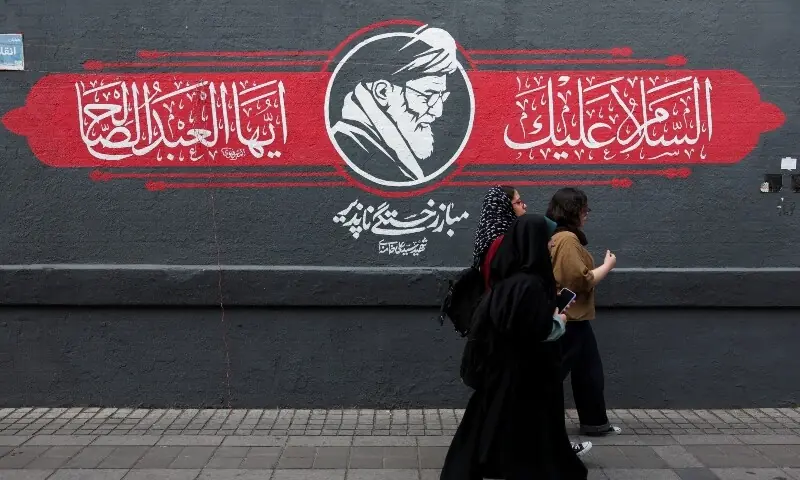
Iran weighs US response as Trump rules out attack before midterms
• Araghchi says Tehran can reply to proposal within days; Iranian atomic chief vows not to give up enrichment • Centcom terms Hormuz closure claims ‘false’ TEHRAN: Iran announced on Thursday that it was still reviewing Washington’s response to a proposal under which the Strait of Hormuz could reopen within seven days, as US President Donald Trump indicated that he will not attack Iran before November’s midterm elections amid ‘productive talks’. Iranian Foreign Minister Abbas Araghchi said Tehran could reply within days, according to the semi-official Tasnim news agency, emphasising that “the diplomatic process is still continuing”. Trump wrote on Truth Social that Washington will not strike Iran prior to the Nov 3 midterm elections, calling talks with Tehran “productive”. “I want to make it clear to everybody that, while Iran is in very bad condition … we will not be attacking Iran at any time prior to the midterm elections to be held in the United States on Nov 3,” Trump wrote. Meanwhile, Trump said that his special envoy Steve Witkoff is “doing very well” in negotiations with Iran, though he indicated that an agreement is not his preferred outcome, Anadolu reported. “He’s working on the Iran deal and doing very well. I think the deal isn’t really something that I want to do, but they’re willing to offer us anything to stop,” Trump told supporters at a campaign rally in San Antonio, Texas, adding that Tehran “will never have a nuclear weapon”. Trump described Witkoff as “a great negotiator” who has “done some phenomenal things”, citing the ceasefire deal in Gaza, and said he expects the war with Iran to end soon. “That war ends — it’s going to be very soon. It’s got to be very soon,” Trump said, describing Iran as “a failed nation”. He also reiterated his claim that Iran has been defeated “economically and militarily” and said the US naval blockade will remain in place, while claiming that oil is flowing through the Strait of Hormuz in “record numbers” with 22 million barrels passing through Wednesday night. Despite the ongoing talks, Iran will not abandon uranium enrichment or hand over its uranium, state media reported Thursday, citing Mohammad Eslami, the head of Iran’s Atomic Energy Organisation. Dismissing renewed US threats against Iran’s nuclear facilities as “nothing new”, he said enrichment was “an inseparable part” of the nuclear process. On the aviation front, the first commercial flight operated by a foreign airline to fly into Iran since the outbreak of the Middle East war landed on Thursday, state media reported, after the United States granted a sanctions waiver for Iraq’s national carrier. The waiver applies to pilgrims travelling between Iran and Najaf, alongside a separate agreement allowing Iranian airlines, except Mahan Air, to operate daily flights on the route. At sea, Maj Gen Ahmad Vahidi, commander-in-chief of the IRGC, warned that military forces are ready “with crushing weapons to deliver a decisive response to any attempt at unauthorised passage in the Strait of Hormuz,” Fars reported. US Central Command rejected Iranian claims that the waterway is closed. However, shipping data from analytics firm Kpler showed the number of vessels transiting the strait fell to seven on Tuesday, the lowest in more than two months, before edging up to 10 on Wednesday, after tanker attacks reached a wartime high last week. “Crude crossing the strait fell 27 per cent from a wartime high the week before, to at least 10.1 million barrels a day,” Kpler analysts Emmanuel Belostrino and Yui Torikata wrote Tuesday, though rising exports from the Gulf of Oman and the Red Sea kept overall Middle East crude exports at pre-war levels. Published in Dawn, October 9th, 2026