THE Gilgit-Baltistan Assembly will be elected today by the people of that region. Yet again, themes like the region’s provincial status, the rights of its people, and ownership of its indigenous resources have headlined the run-up to the election. Each party has made many promises to the people, and they will vote today to decide whom to trust. It is hoped that the turnout will be healthy, that the electoral process will not be hindered, and that the public’s mandate will be honoured. There are good reasons to be wary. There have been too many similarities between the events of recent weeks and what transpired in the run-up to Pakistan’s 2024 general election. One party’s candidates have again been expected to run without a single identifiable symbol, and its leadership has repeatedly complained of significant difficulties during poll campaigning. Other political parties , especially those in power in Islamabad, seem to have faced no such restriction. Much ink has been spilt over the need to respect the political process and to allow it to unfold organically. It can only be hoped that the announced results will reflect the will of the people. It is important that whichever party ultimately forms the government puts the needs of the people of GB above everything else. It has been a long-running complaint that, regardless of which federal party wins the election, the GB government seems more entangled with Islamabad than in addressing the concerns of its constituents. Considering the many promises made on the campaign trail in this regard, there will also be some expectation among the people of the region that their new government will press the question of the region’s constitutional status . This is a complicated matter, with implications that go well beyond simple governance and administration. The different aspects of this question must be reviewed and debated at length, not just in the Gilgit-Baltistan Assembly but also in both Houses of the Pakistani parliament. However, now that the people of GB have been promised this by several prominent leaders, it should not be deferred until the next election cycle. The region faces a unique set of challenges and constraints that must be addressed proactively. The people have the opportunity today to chart a course forward at the ballot box. It is hoped that they will make good use of it. Published in Dawn, June 7th, 2026
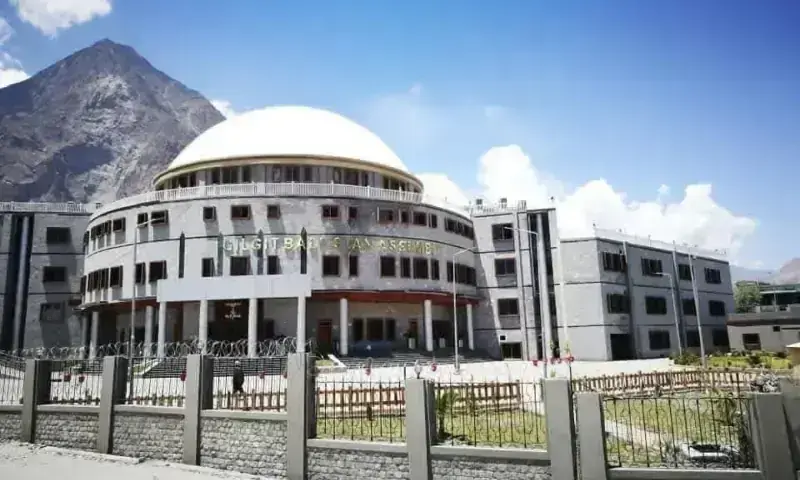
GB election
THE Gilgit-Baltistan Assembly will be elected today by the people of that region. Yet again, themes like the region’s provincial status, the rights of its people, and ownership of its indigenous resources have headlined the run-up to the election. Each party has made many promises to the people, and they will vote today to decide whom to trust. It is hoped that the turnout will be healthy, that the electoral process will not be hindered, and that the public’s mandate will be honoured. There are good reasons to be wary. There have been too many similarities between the events of recent weeks and what transpired in the run-up to Pakistan’s 2024 general election. One party’s candidates have again been expected to run without a single identifiable symbol, and its leadership has repeatedly complained of significant difficulties during poll campaigning. Other political parties , especially those in power in Islamabad, seem to have faced no such restriction. Much ink has been spilt over the need to respect the political process and to allow it to unfold organically. It can only be hoped that the announced results will reflect the will of the people. It is important that whichever party ultimately forms the government puts the needs of the people of GB above everything else. It has been a long-running complaint that, regardless of which federal party wins the election, the GB government seems more entangled with Islamabad than in addressing the concerns of its constituents. Considering the many promises made on the campaign trail in this regard, there will also be some expectation among the people of the region that their new government will press the question of the region’s constitutional status . This is a complicated matter, with implications that go well beyond simple governance and administration. The different aspects of this question must be reviewed and debated at length, not just in the Gilgit-Baltistan Assembly but also in both Houses of the Pakistani parliament. However, now that the people of GB have been promised this by several prominent leaders, it should not be deferred until the next election cycle. The region faces a unique set of challenges and constraints that must be addressed proactively. The people have the opportunity today to chart a course forward at the ballot box. It is hoped that they will make good use of it. Published in Dawn, June 7th, 2026