• 22,320 parents refuse to let health workers administer drops • 18.6 million children vaccinated across 79 high-risk districts ISLAMABAD: Despite thousands of parental refusals, a recent sub-national polio vaccination campaign reached over 18.6 million children in 79 high-risk districts, achieving 98 per cent coverage, health authorities announced. The Pakistan Polio Eradication Initiative reviewed the May 18-24 drive during a recent meeting, noting that while the national refusal rate remained low at 0.12pc, exactly 22,320 parents refused to let health workers administer the drops. The sub-national campaign was launched specifically in areas where the poliovirus had been detected in environmental samples, aiming to curb transmission risks. Approximately 163,000 frontline health workers went door-to-door to deliver the oral vaccine. According to campaign data, 404,417 children, which is about 2.1pc of the target demographic, were initially missed because they were not home during household visits. Through targeted follow-up efforts in the final days of the drive, vaccination teams successfully reached 88pc of those missed children to help close remaining immunity gaps. The campaign covered regions across the country, vaccinating 6.06 million children in Punjab, 5.74 million in Sindh, 4.39 million in Khyber Pakhtunkhwa, 1.96 million in Balochistan and about 435,000 in the Islamabad Capital Territory. “The successful completion of this campaign reflects the dedication of our frontline workers and the continued support of parents, caregivers and communities across Pakistan,” Prime Minister’s Focal Person on Polio Eradication Ayesha Raza Farooq said in a statement. “Every missed child remains a risk, and we must continue working together until polio is eradicated from the country.” Pakistan and neighbouring Afghanistan are the only two countries in the world where wild poliovirus remains endemic. Given the ease of cross-border transmission, PEI officials recently joined Afghanistan’s polio programme at a Technical Advisory Group meeting to review epidemiological trends and strengthen regional coordination. At the national level, authorities are currently finalising the 2026 National Emergency Action Plan. The framework outlines priority actions to accelerate eradication efforts, strengthen outbreak responses and permanently close immunity gaps. Published in Dawn, June 5th, 2026
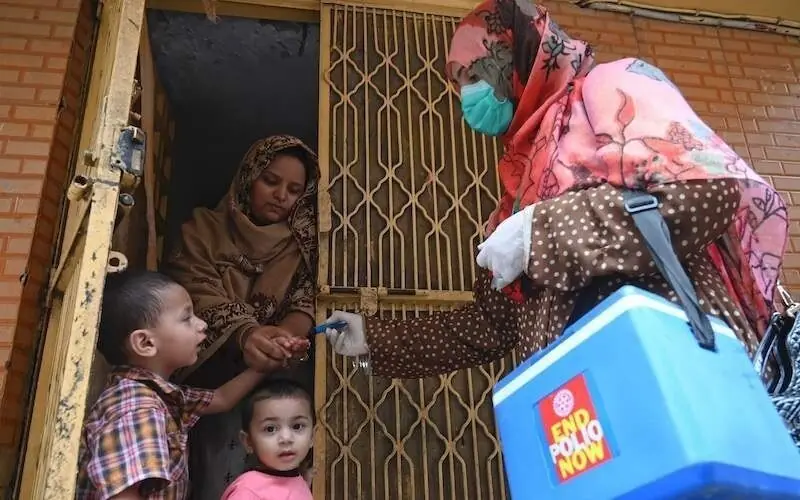
Despite holdouts, polio drive still reaches millions
• 22,320 parents refuse to let health workers administer drops • 18.6 million children vaccinated across 79 high-risk districts ISLAMABAD: Despite thousands of parental refusals, a recent sub-national polio vaccination campaign reached over 18.6 million children in 79 high-risk districts, achieving 98 per cent coverage, health authorities announced. The Pakistan Polio Eradication Initiative reviewed the May 18-24 drive during a recent meeting, noting that while the national refusal rate remained low at 0.12pc, exactly 22,320 parents refused to let health workers administer the drops. The sub-national campaign was launched specifically in areas where the poliovirus had been detected in environmental samples, aiming to curb transmission risks. Approximately 163,000 frontline health workers went door-to-door to deliver the oral vaccine. According to campaign data, 404,417 children, which is about 2.1pc of the target demographic, were initially missed because they were not home during household visits. Through targeted follow-up efforts in the final days of the drive, vaccination teams successfully reached 88pc of those missed children to help close remaining immunity gaps. The campaign covered regions across the country, vaccinating 6.06 million children in Punjab, 5.74 million in Sindh, 4.39 million in Khyber Pakhtunkhwa, 1.96 million in Balochistan and about 435,000 in the Islamabad Capital Territory. “The successful completion of this campaign reflects the dedication of our frontline workers and the continued support of parents, caregivers and communities across Pakistan,” Prime Minister’s Focal Person on Polio Eradication Ayesha Raza Farooq said in a statement. “Every missed child remains a risk, and we must continue working together until polio is eradicated from the country.” Pakistan and neighbouring Afghanistan are the only two countries in the world where wild poliovirus remains endemic. Given the ease of cross-border transmission, PEI officials recently joined Afghanistan’s polio programme at a Technical Advisory Group meeting to review epidemiological trends and strengthen regional coordination. At the national level, authorities are currently finalising the 2026 National Emergency Action Plan. The framework outlines priority actions to accelerate eradication efforts, strengthen outbreak responses and permanently close immunity gaps. Published in Dawn, June 5th, 2026